
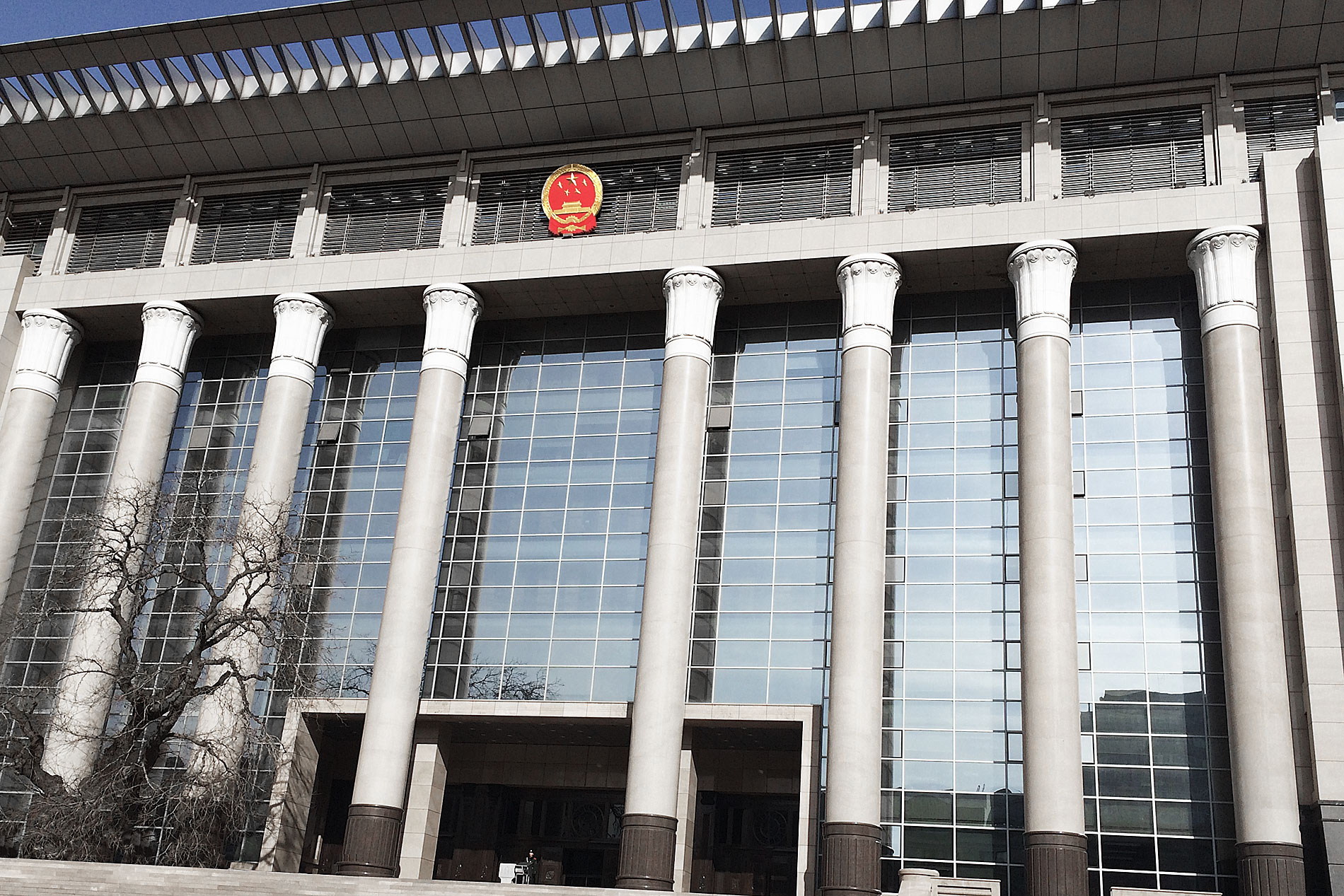
On 26 October 2018, the Standing Committee of China’s National People’s Congress (NPC) issued the Provisions which established the new Intellectual Property Court of the Supreme People’s Court (SPC) (最高人民法院知识产权法庭), a court of appeal at national level, with a jurisdiction mainly focused on intellectual property appeal cases which require strong technical expertise, such as patents¹. The Provision has come into effect on 1 January 2019.
The aim of the Provisions is to create a unified platform to manage appeals relating to complex intellectual property disputes across the country, to improve IP protection, especially for businesses in high-tech fields, both Chinese and foreign.
As stated by NPC, the Decision was made “in order to unify the criteria of judgements in intellectual property cases and further strengthen the judicial protection of intellectual property and optimize the legal environment to promote scientific and technological innovation”. It is apparent that such move is again aimed, like many other initiatives in different sectors, to strengthen China’s high tech knowledge, capabilities and protection.
The current IP courts organization
In the last years there have been a number of developments in the Chinese IP judicial system, including the establishment of specialized IP courts in late 2014 in Beijing, Shanghai and Guangzhou and, in the following years, of other intellectual property courtrooms, with cross-regional jurisdictions, in 15 cities such as Nanjing, Suzhou and Wuhan.
The IP courts in Beijing, Shanghai and Guangzhou are independent judiciaries with self-ruling rights on staff, properties and asset, while other local IP courts are special judicial administrations set up within relevant People’s Courts. Each of these courts/tribunals requires that their judges have significant IP experience.
The specialized IP courts have proved to be increasingly aggressive in terms of granting provisional measures, and awarding higher damages, thus tackling one of the most disappointing aspect of IP engorcement in China, I.e awarding of ridicously low damages.
These courts are reckoned to have ensured a growing consistency of the overall IP related judgments, which shall lead to increasing effectiveness of rule of law and coherence in Chinese IP enforcement.
The next step of the reform was naturally the establishment of the State Intellectual Property Court (similar to the Court of Appeals for the Federal Circuit, CAFC in the US), which is important to further unify trial standards.
Jurisdiction of the SPC IP Court
The SPC’s IP Court jurisdiction is described as follows:
“1. The parties dissatisfied with the first-instance judgments and rulings of intellectual property civil cases involving invention patents, utility model, new plant varieties, integrated circuit layout designs, technical secrets, computer software, monopoly, etc., may file for appeal, which shall be tried by the Supreme People’s Court.
2. The parties dissatisfied with the first-instance judgments and rulings of patents, new plant varieties, integrated circuit layout designs, technical secrets, computer software, monopoly and other professional intellectual property administrative cases, may file for appeal, which shall be tried by the Supreme People’s Court.
3. The first-instance judgments, rulings, and mediation documents of the above-mentioned cases that have already taken legal effect, and are subject to application for retrial and review shall be tried by the Supreme People’s Court. The Supreme People’s Court may also order the people’s court at lower level to retrial.”²
[original text for better reference:
一、当事人对发明专利、实用新型专利、植物新品种、集成电路布图设计、技术秘密、计算机软件、垄断等专业技术性较强的知识产权民事案件第一审判决、裁定不服,提起上诉的,由最高人民法院审理。
二、当事人对专利、植物新品种、集成电路布图设计、技术秘密、计算机软件、垄断等专业技术性较强的知识产权行政案件第一审判决、裁定不服,提起上诉的,由最高人民法院审理。
三、对已经发生法律效力的上述案件第一审判决、裁定、调解书,依法申请再审、抗诉等,适用审判监督程序的,由最高人民法院审理。最高人民法院也可以依法指令下级人民法院再审。]
This clearly implies that the new appeal court shall only handle patent and technology-related cases while trademark and copyright cases will follow a separate litigation track.
The objectives
Prior to China, United States and countries in European Union already had appellate level courts with the jurisdiction to hear patent infringement cases.
Zhou Qiang, the president of the SPC, said that “handing civil and administrative patent appeals to the SPC IP Tribunal will unify validity and infringement adjudications, improve case efficiency and quality, and improve judicial protection of IP” and that “due to the complexity of IPR cases and expertise needed for their trials, a national appeal court will help prevent inconsistency of legal application and improve the quality and efficiency of trials”.
One of the reasons the NPC cited for creating a unified patent appeals tribunal was to apply the law consistently, because of disparities in past rulings from the different appellate courts.
This new PRC court of appeals will seek to level-up Intellectual Property protection in China hearing IP cases from around the country with the goal of creating more unified and predictable decision making on key IP protection areas.
The new court should be seen as part of ongoing trends toward increasing and improving IP enforcement and protection in China enhancing the consistency and professionalism of iP appeals cases.
Conclusions
Deficiencies in IP protection have been a part of the criticisms risen at international level, particularly by the USA against China.
Overall, China’s intellectual property judicial system has been further improved, courts have been continuously increasing penalties for intellectual property infringements, and better judicial protection has been provided for intellectual property rights. A close look shall be paid to the cases that will be tried by the new IP court to better feel the changes it might bring about.